
Time is one of the few things that feels universally scarce. Days fill quickly with responsibility, communication and noise, often without much thought about where attention is being spent. Even moments intended for rest are frequently interrupted by alerts, reminders or the quiet pressure to stay productive.
Over time, this constant engagement changes how people experience their own lives. Stillness becomes unfamiliar. Silence feels uncomfortable. The idea of stepping away, even briefly, can feel indulgent or unrealistic.
Yet when people do manage to create uninterrupted time, something shifts. Not dramatically or instantly, but subtly and steadily.
The Cost of Never Switching Off
Modern life rewards responsiveness. Being available, efficient and adaptable is often praised. However, this expectation comes with a cost. Mental fatigue builds quietly. Focus becomes fragmented. Rest feels shallow rather than restorative.
Many people do not realise how tired they are until they stop. The body adapts to constant stimulation, holding tension as a default state. Shoulders lift. Breathing shortens. Sleep becomes lighter.
These changes are not signs of weakness. They are natural responses to prolonged demand.
Why Distance Creates Perspective
Stepping away from everyday environments can change how time is perceived. Familiar routines tend to trigger automatic behaviour. You wake, move, respond and repeat without conscious awareness.
A different setting interrupts this cycle. Attention shifts outward and inward at the same time. Simple things such as walking, eating or breathing become more noticeable.
This distance allows perspective to return. Thoughts slow. Priorities reorder themselves without effort. It becomes easier to notice what has been missing.
Movement as a Way of Paying Attention
Yoga is often described as a physical practice, but its deeper function is awareness. Movements are slow enough to notice sensation. Breathing is steady enough to observe patterns. Postures encourage presence rather than performance.
This type of movement invites people back into their bodies without pressure. It is not about achievement or comparison. It is about listening.
Over time, this attention carries beyond the mat. People notice how they sit, how they stand and how they respond to stress. Movement becomes a way of understanding rather than controlling the body.
Stillness Is Not Empty
For many, stillness feels unfamiliar. When movement stops, thoughts often rush in to fill the space. This can feel uncomfortable at first.
With guidance and time, stillness becomes something else entirely. It becomes a place where the nervous system can settle. Breathing deepens. Muscles soften. Thoughts lose urgency.
Learning to sit with stillness is not about forcing calm. It is about allowing space for the body and mind to reset naturally.
Why Shared Spaces Feel Supportive
There is something reassuring about slowing down alongside others. Shared quiet removes the expectation to explain or justify rest. It normalises stillness.
In group wellbeing environments, people often feel held without being observed. Silence becomes collective rather than isolating. Movement feels grounded rather than exposed.
This shared experience can be particularly meaningful for those who spend much of their time supporting others.
Intentional Time Away
Many people struggle to rest fully at home. Even when alone, responsibilities linger in the background. Tasks remain unfinished. Notifications are never far away.
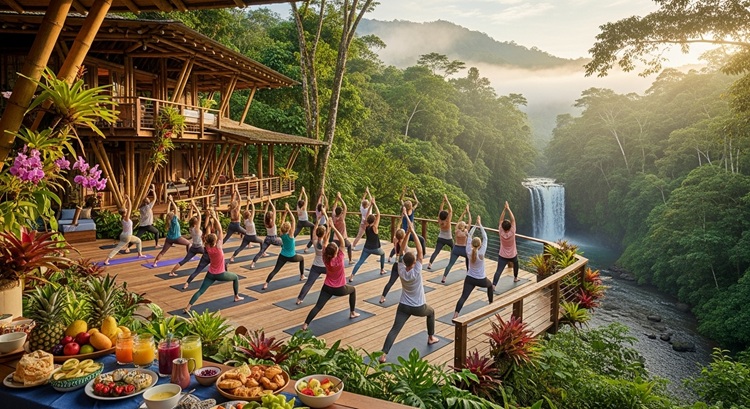
Intentional experiences such as yoga retreats create boundaries around time. Days are structured gently, removing the need to plan or decide. This structure creates permission to rest deeply.
When choice is removed, rest becomes easier.
Guidance Without Pressure
The quality of guidance matters in these spaces. Supportive teachers create environments where people feel safe to move, rest and reflect without expectation.
There is no requirement to be flexible, experienced or knowledgeable. Practices are offered rather than imposed. People are encouraged to listen to their own bodies rather than follow external cues.
Organisations such as The Yoga Collaboration are known for this inclusive approach, focusing on presence and accessibility rather than performance.
Rest as a Learned Skill
Rest does not come naturally to everyone. Many people have learned to associate stillness with guilt or inefficiency.
Yoga and guided relaxation help retrain this relationship. Over time, the body learns that rest is safe. The mind learns that stillness does not need to be filled.
This skill becomes valuable far beyond time away. It supports better sleep, clearer thinking and more balanced emotional responses.
What People Take Home With Them
The most meaningful outcomes of stepping away are often quiet ones. People return noticing their breath more often. They pause before reacting. They move with greater awareness.
These small changes accumulate. Stress feels more manageable. Focus improves. Boundaries become clearer.
Rather than being an escape, the experience becomes a reference point for balance.
Simplicity as a Foundation
Wellbeing does not require complexity. Often, it emerges when unnecessary stimulation is removed.
Breathing. Movement. Rest. These basic elements have profound impact when given space.
Removing excess allows the essential to surface.
Choosing Presence Over Productivity
Making time for yourself is not about withdrawing from life. It is about engaging with it more fully.
When people allow themselves uninterrupted time, they often return more present, more patient and more resilient. They respond rather than react. They listen more carefully.
In a culture that values constant output, choosing presence becomes a meaningful act of care.
 physicalfitness.health.blog
Leave a comment